

Reasons to Bid
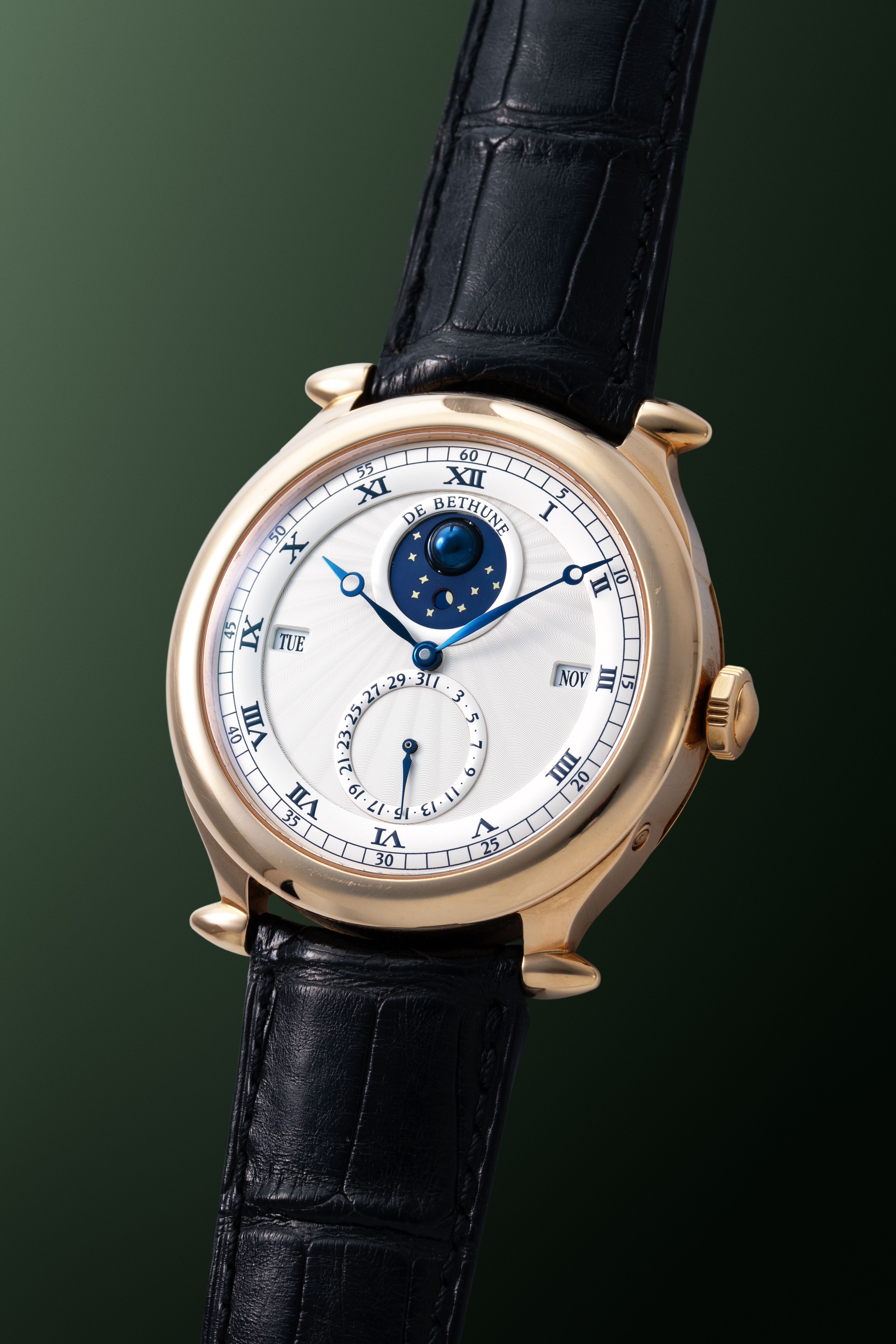
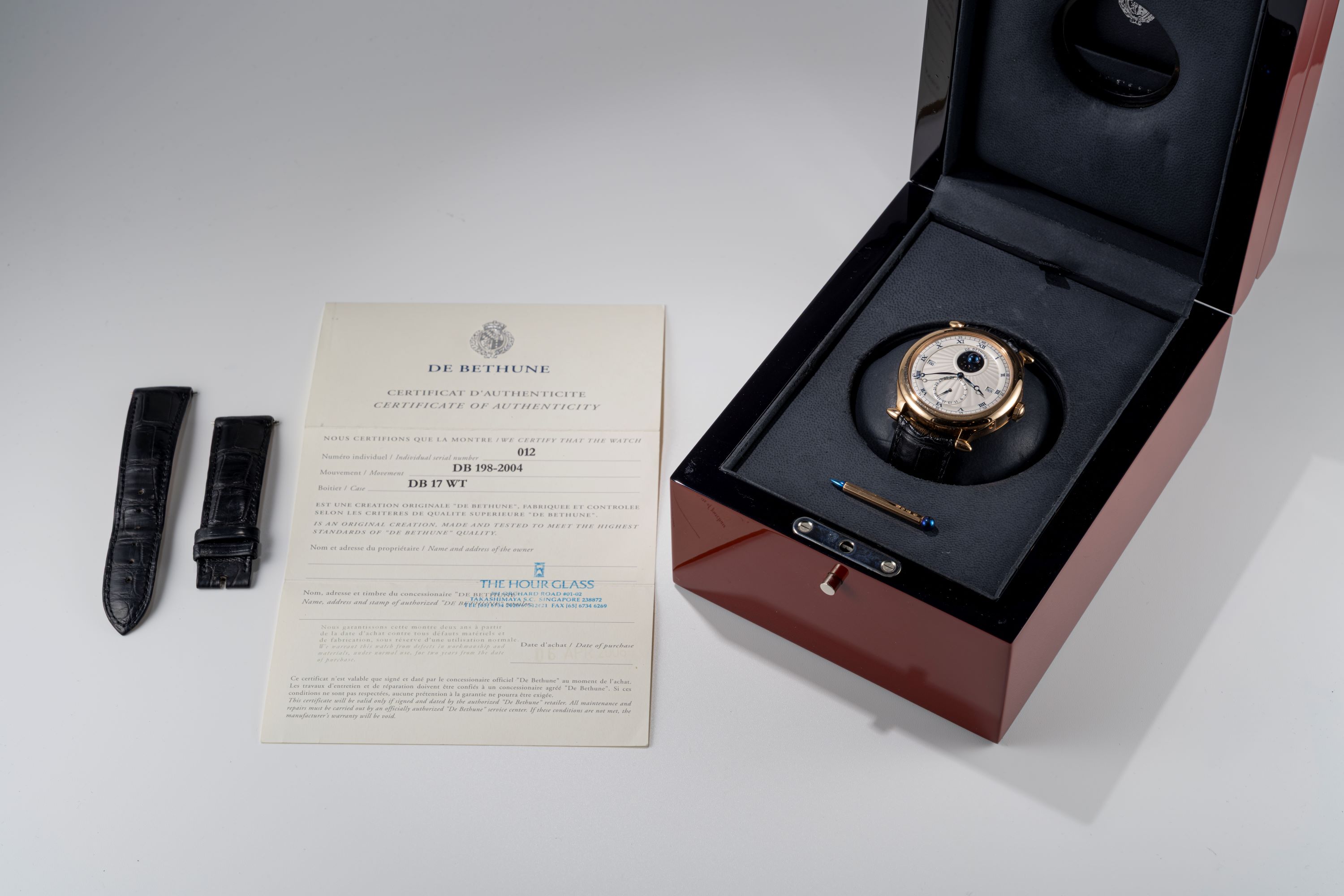
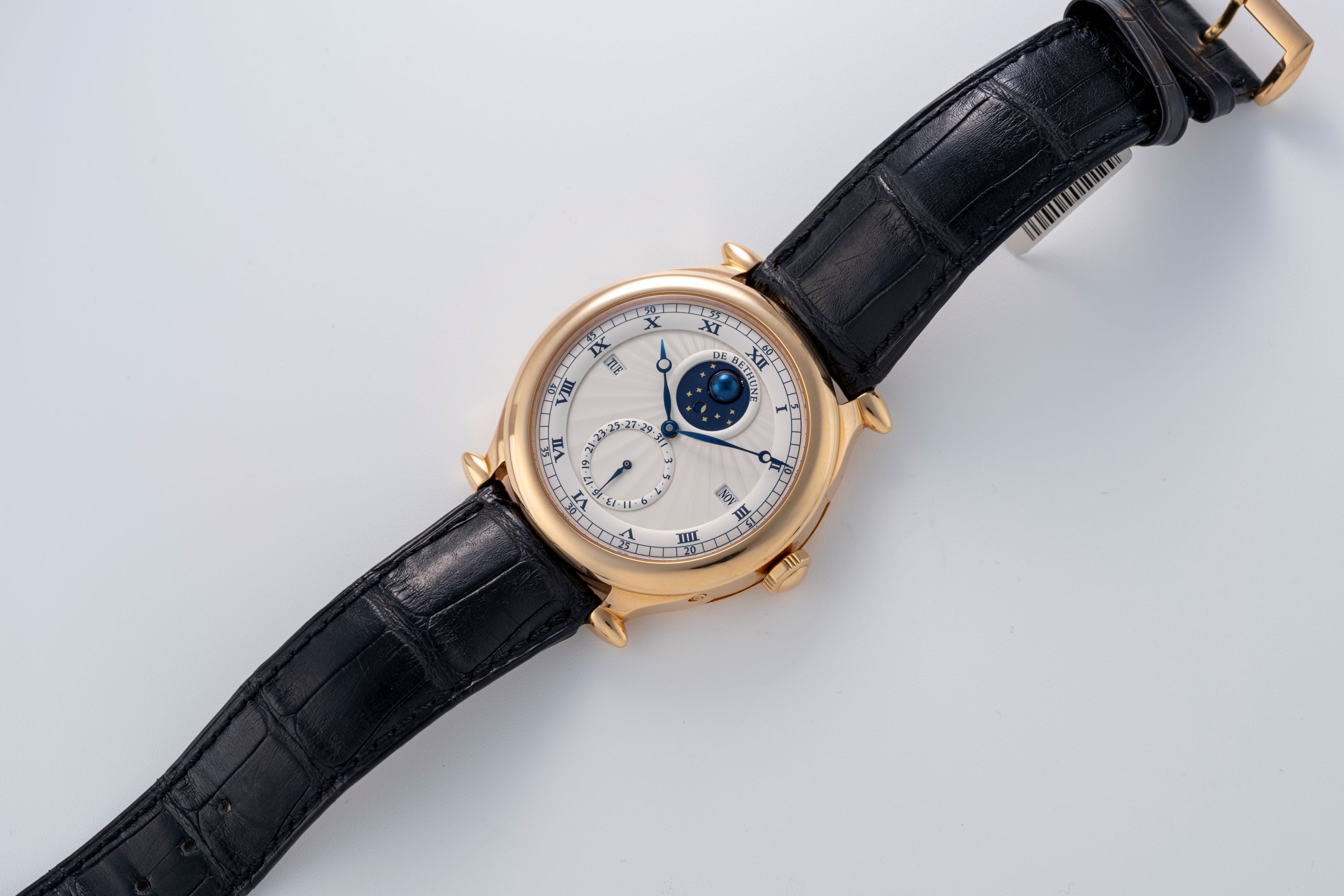
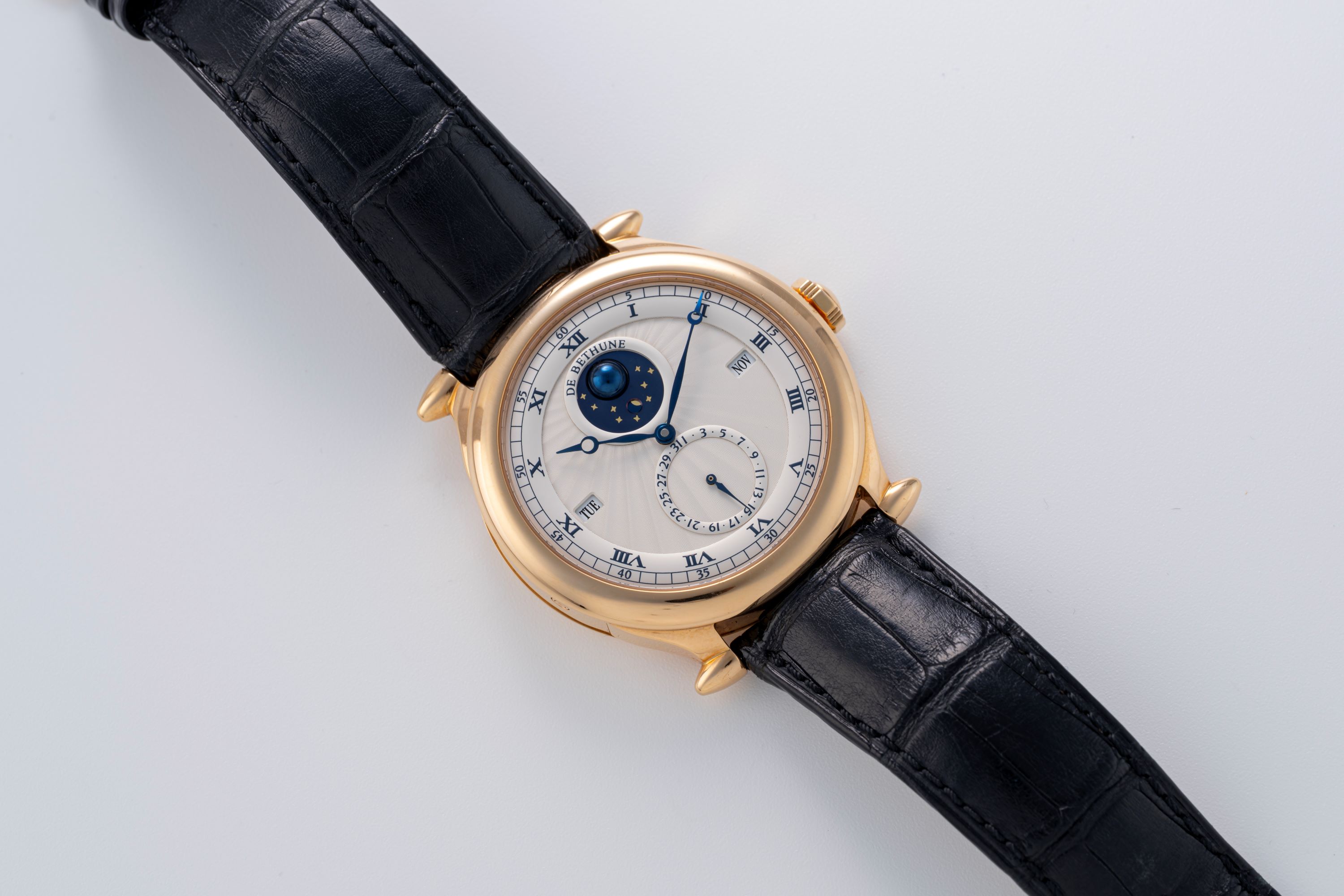
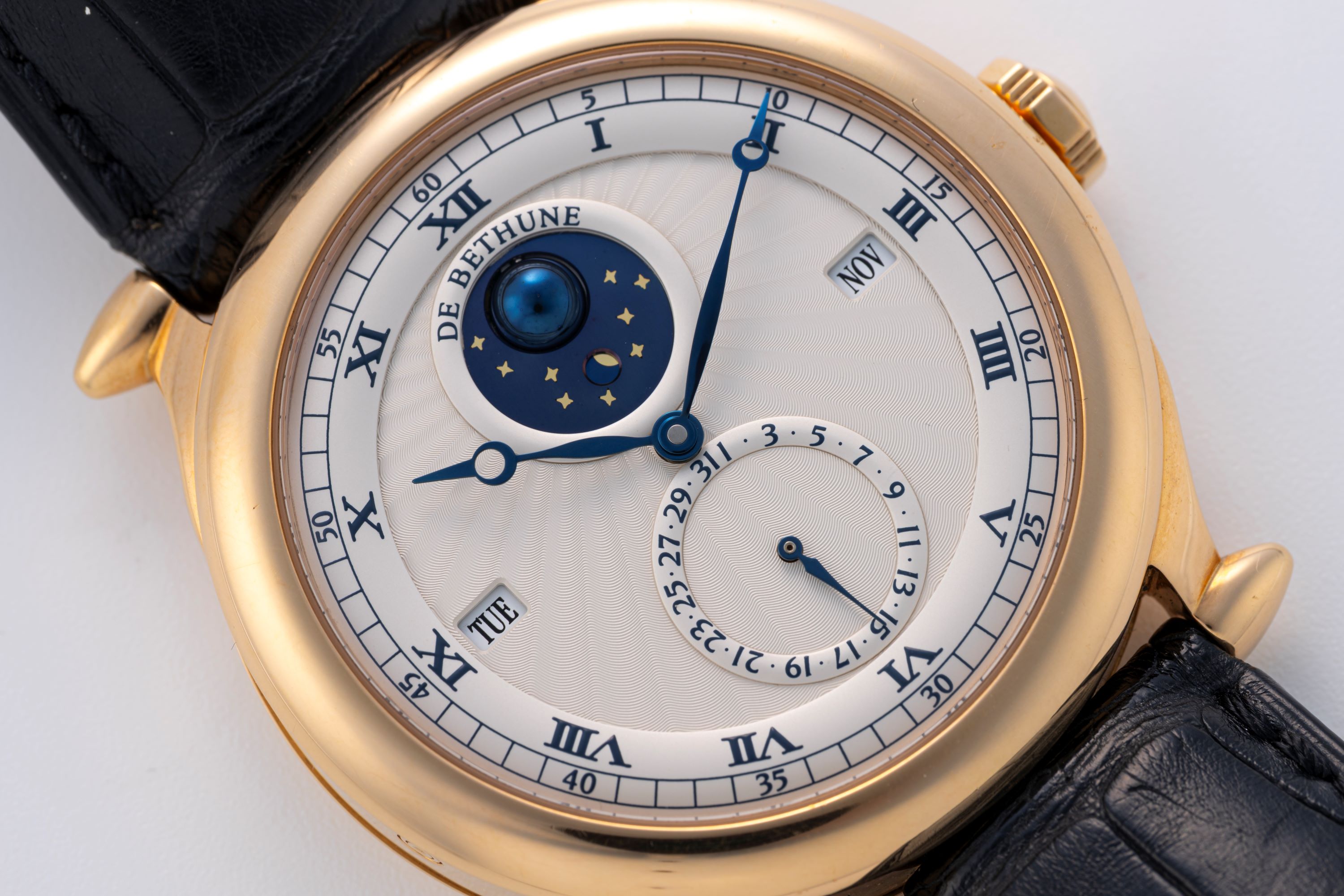
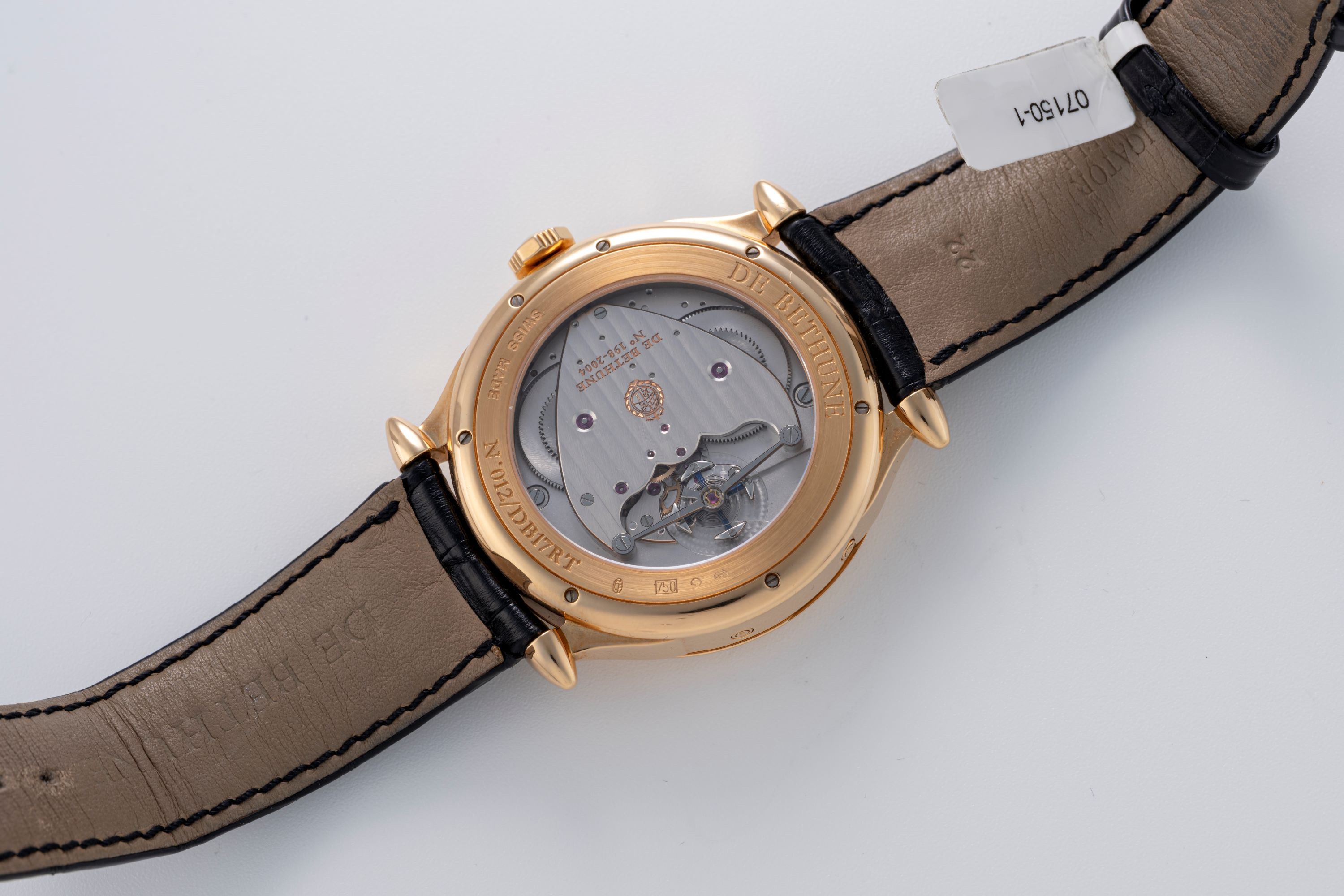
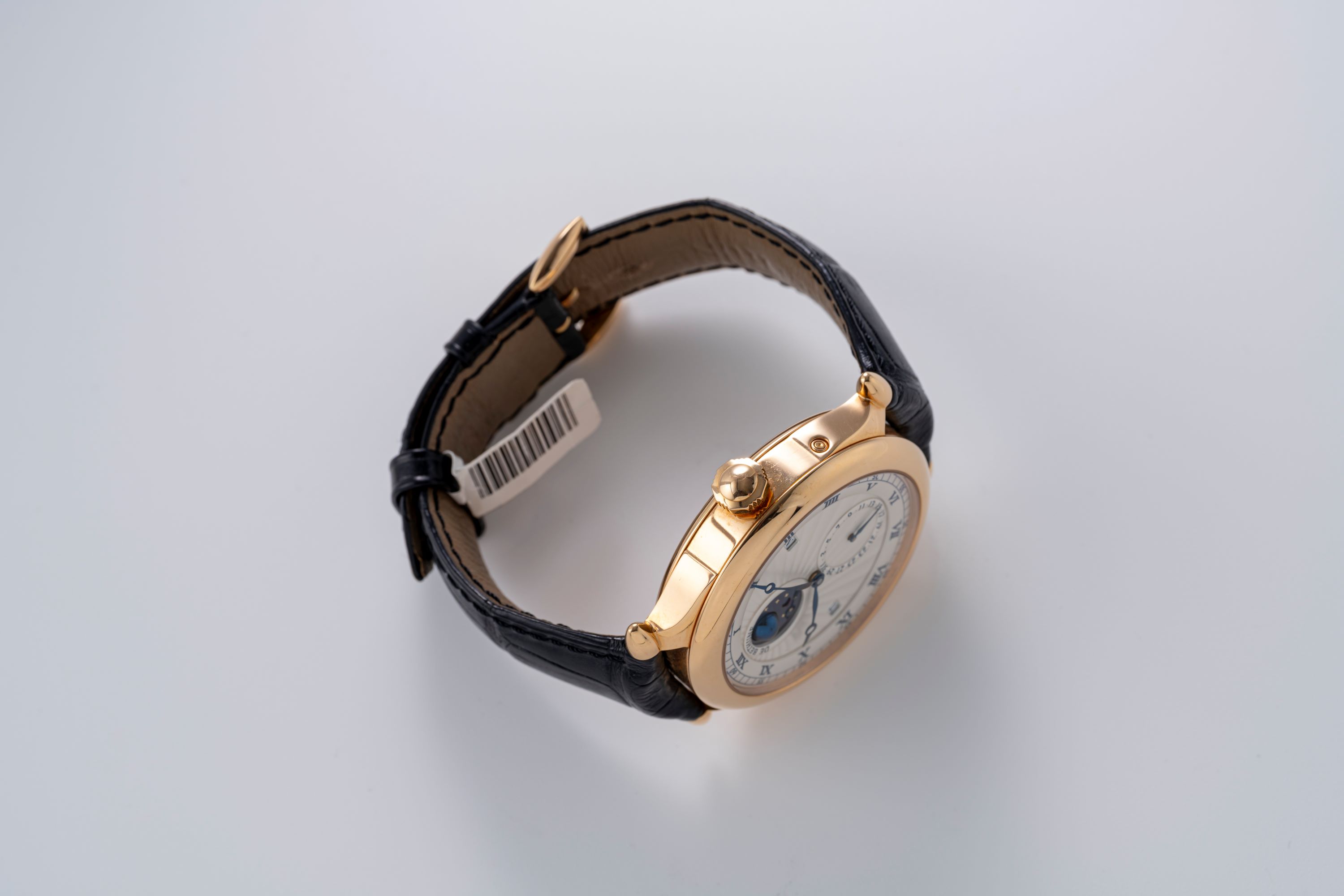
In 2004, just two years after its founding, De Bethune introduced the DB15 perpetual calendar, a landmark creation that showcased the brand’s early technical ambition. Its most celebrated feature is the astronomical moon-phase, accurate to one day every 122 years, expressed through a rotating platinum and blued-steel spherical moon. This sits beneath a traditional perpetual calendar with a discreet leap-year indicator hidden within the largest star of the decorative sub-dial at 12 o’clock. Powering the watch is the in-house Caliber DB2004, De Bethune’s first perpetual calendar movement, featuring the patented four-spoke titanium balance with platinum ogival weights and a self-compensating free-sprung hairspring. The balance is held under a long elastic steel bridge, a precursor to the triple “pare-chute” shock-absorber later developed by Denis Flageollet. With a five-day power reserve, the movement reflects early De Bethune architecture, including the shield-shaped barrel bridge visible through the sapphire back. The DB17 collection, launched in 2005 as an evolution of the DB15, introduced stylistic updates such as a guilloché lotus-pattern dial, a narrower domed chapter ring, wider bezel, and pomme-style hands. Although the DB17 was designed to house the updated Caliber DB2004 with the full triple pare-chute system, the present example instead contains the earlier version of the movement, retaining the long elastic bridge without the later shock-absorption upgrade. This suggests the watch was produced during the transitional phase of the DB17’s development, a period in which De Bethune often used remaining early-generation components. We have not identified other DB17 examples with this configuration, indicating that such pieces are exceedingly rare within the lineage.

 At our Boutique
 Bank Wire Transfer
 Wire Payments