











Reasons to Bid
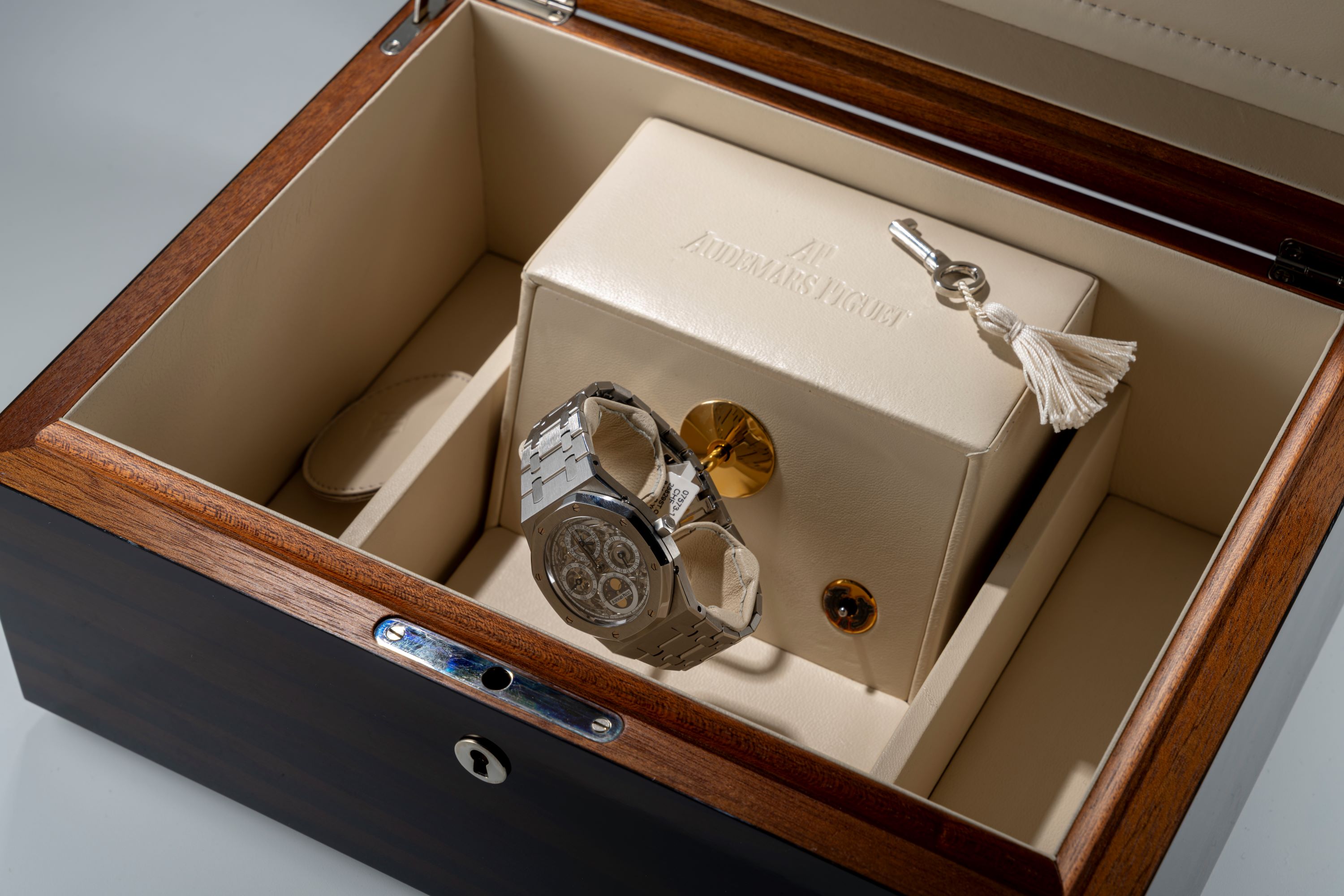
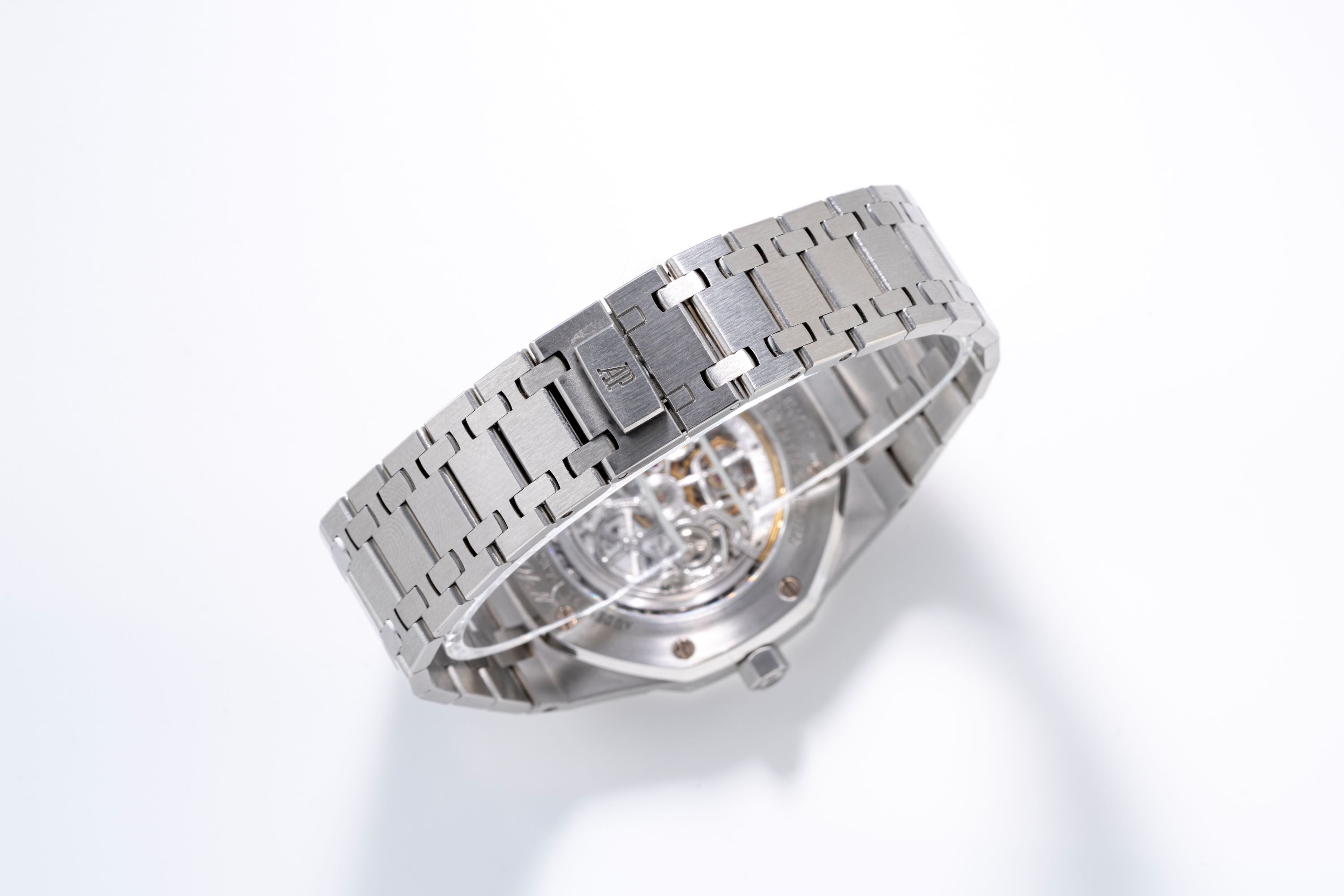
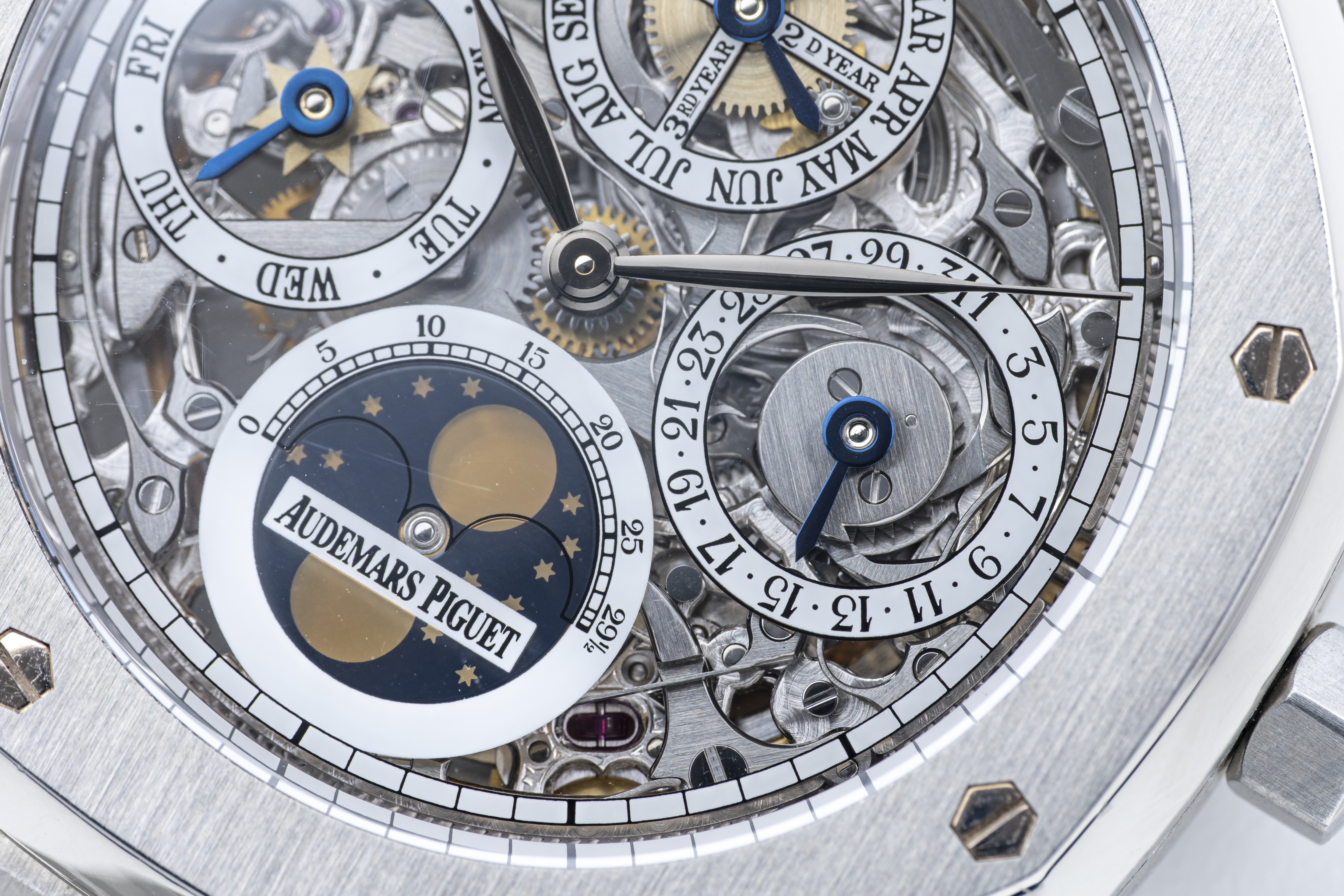
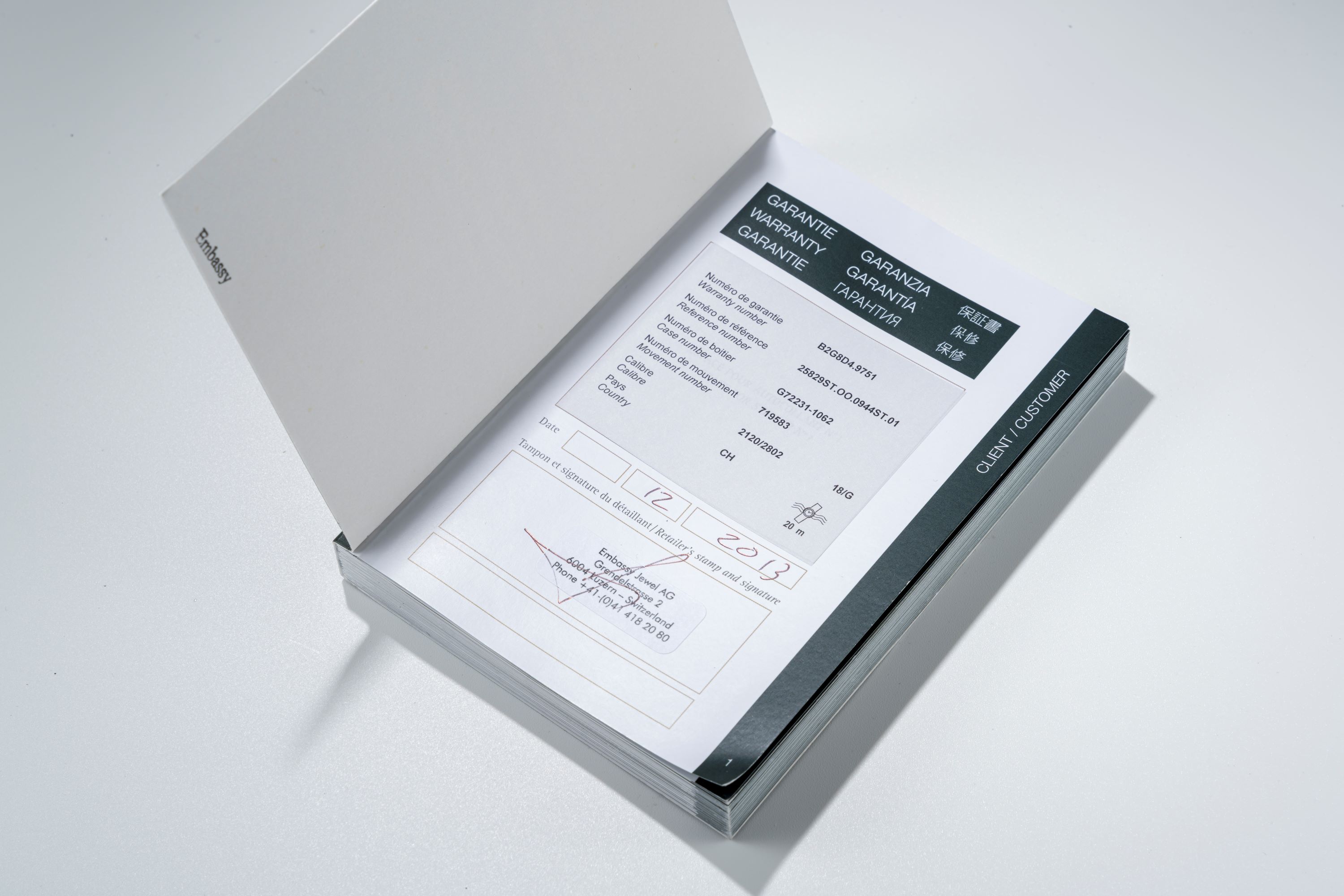
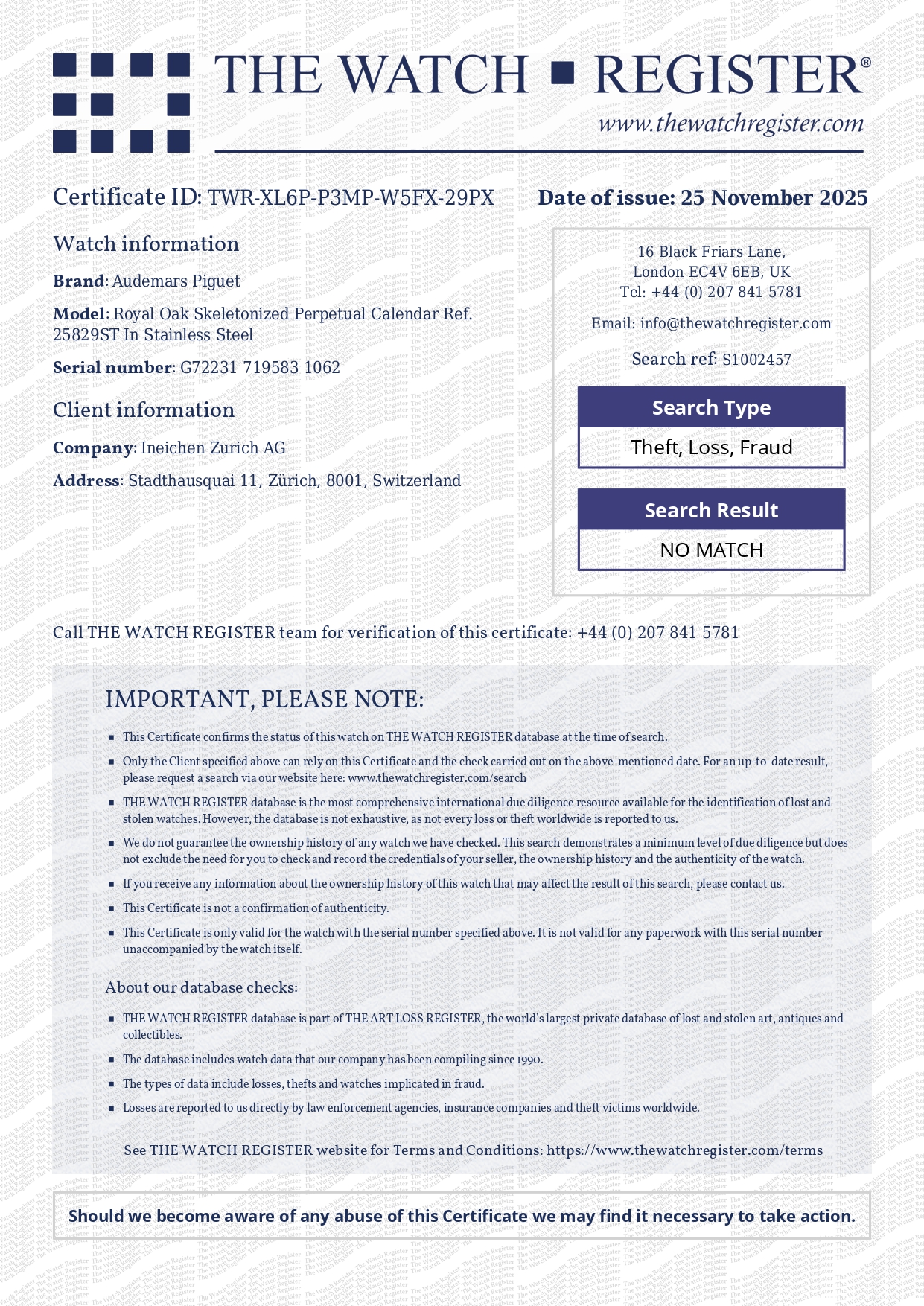
Audemars Piguet introduced the present reference in the mid-1990s, likely in 1996 or 1997, as the successor to the open-worked Royal Oak Perpetual Calendar Ref. 25636. The new Ref. 25829 added a notable upgrade: a leap-year indicator, displayed by a small hand within the month sub-dial at 12 o’clock. According to Phillips, the reference was produced from 1996 to 2013 in several metals: 371 pieces in stainless steel, 102 in yellow gold, 174 in pink gold, 156 in platinum, a 25-piece steel-and-platinum edition, and a 2006 tantalum series comprising 15 pieces in tantalum/yellow gold, 16 in tantalum/platinum, and 16 in tantalum/pink gold. The watch is powered by the ultra-thin Caliber 2120/2802, which, with a height of only 3.95 mm, remained the thinnest full-rotor perpetual calendar movement until 2018. The base caliber was supplied by Jaeger LeCoultre, with the calendar module produced by Dubois Dépraz, both long-standing AP partners. A defining design feature of the 25829 is its transparent dial, revealing the finely finished perpetual calendar mechanism, complemented by rarely seen blackened-gold leaf hands. Although this example carries a number above 1000, exceeding the reported 371 steel pieces, Audemars Piguet often used shared number ranges across related references, likely including models such as the 25820ST. More importantly, the late G-series case number (G-72231) confirms a very late production window, placing this watch between 2010 and 2013; it was purchased in 2013. Based on all available information, this appears to be one of the final Ref. 25829ST examples ever produced, and possibly the latest to surface publicly.

 At our Boutique
 Bank Wire Transfer
 Wire Payments